
Career Study Findings: Commitment and Satisfaction in the Texas Early Childhood Workforce

This report presents findings from a statewide survey examining what shapes early childhood workers’ commitment to the field and satisfaction with their careers. Career satisfaction and career commitment represent different aspects of professionals’ experiences. Career satisfaction reflects how positively individuals evaluate their careers, whereas career commitment reflects their dedication to remaining in the profession.
Building on findings from the 2025 TECPDS Career Pathway Study, this report provides additional insight into what helps early childhood professionals enter, remain, and thrive in the field, while exploring the experiences, supports, and motivations associated with long-term career satisfaction and commitment. View the original Career Pathway Study report.
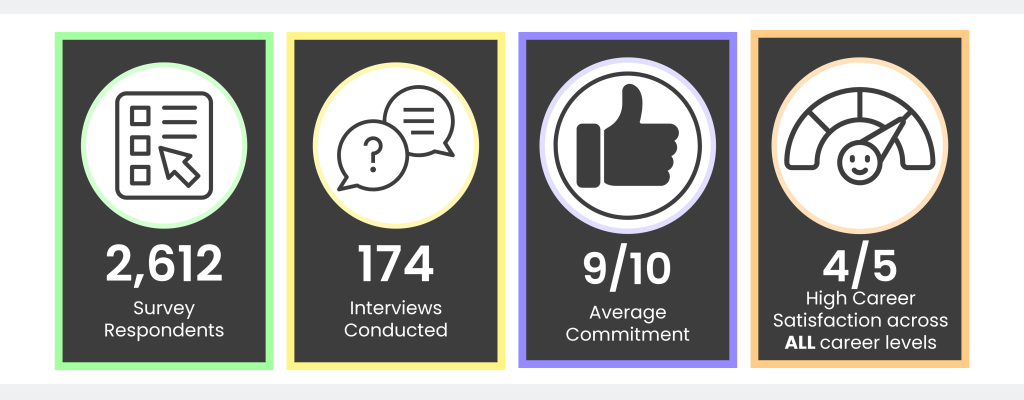
Key Findings at a Glance
- Early childhood professionals reported high commitment and satisfaction.
- Purpose and making a difference were the strongest drivers of workforce outcomes.
- Mentoring, training, and other supports were linked to stronger commitment and satisfaction.
- Support and recognition mattered more than compensation alone.
- Home-based educators reported higher career satisfaction.
- Meaningful work, relationships, and growth opportunities support long-term retention.
Commitment to Early Childhood Careers
What This Means
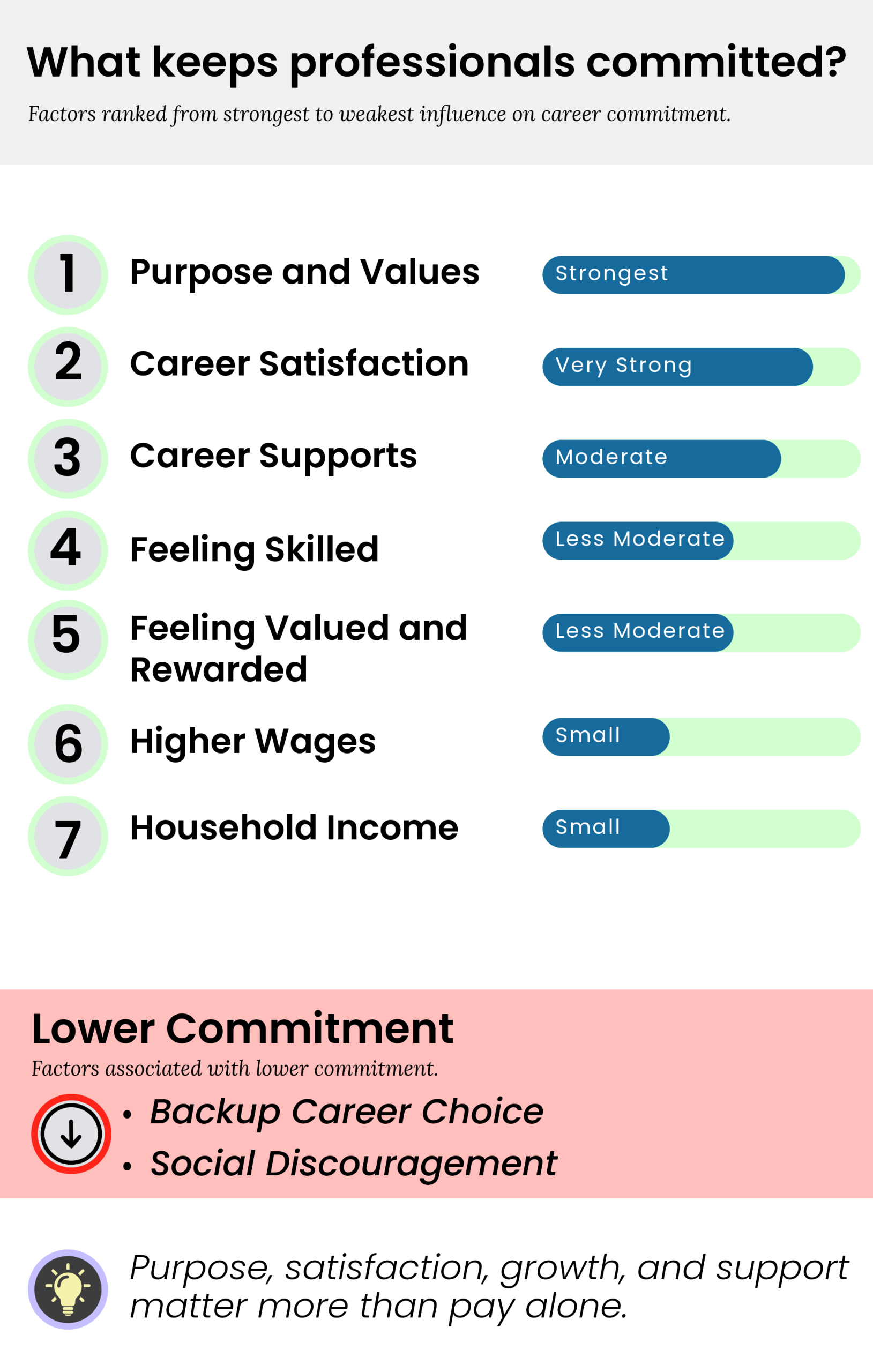
Many early childhood professionals remain committed to the field because the work aligns with their initial motivations to enter it—including practical considerations (e.g., time for family, job security), their sense of purpose, and desire to make a positive difference in children’s lives. Our findings indicate that early childhood professionals’ commitment to the field was predicted more by their intrinsic motivations and practical considerations than by the perceived status or financial benefits of the profession.
This finding aligns with themes emerging from interviews with early childhood professionals, who frequently describe their work as meaningful and child-centered. Many reported staying in the field because they care deeply about supporting children and families, even when compensation does not meet their needs or expectations.
Compensation still matters. Interviews and survey data indicated that wages were still perceived to be low and posed challenges to professionals, but the relationship with commitment was slightly weaker. In other words, while financial stability is important, a sense of purpose appears to be a key factor in why many professionals choose to remain in early childhood education.
Finally, professionals who viewed career supports such as mentoring, professional learning opportunities, and financial assistance for education as an important part of their careers also reported higher levels of commitment to the field. These supports were more strongly associated with commitment than wages alone.
Interestingly, there were no meaningful differences in commitment level across early childhood settings in our sample—center-based child care, home-based child care, public school, and Head Start/Early Head Start respondents shared similarly high commitment levels (average of 8.9 on a 10-point scale). (Please review our Limitations sections for a discussion on how this finding compares to turnover.)
The study did find that the relationship between career supports (e.g., mentors, supportive supervisors, learning opportunities, financial support for education) and commitment level varied slightly across sectors of the workforce. For public school educators, commitment to the field was more closely tied to the perceived importance of both individualized supports (e.g., relationship-based supports, financial support for education, opportunities to take on new job responsibilities) and systems-level supports (e.g., trainings, PLCs, professional networks), which may reflect greater access to high-quality professional supports and pathways. In contrast, center-based child care educators appeared committed to the field regardless of how they rated individualized supports, suggesting that factors such as practical considerations, passion for the work, or other motivations may play a larger role in sustaining their commitment.
Satisfaction with Early Childhood Careers
What This Means
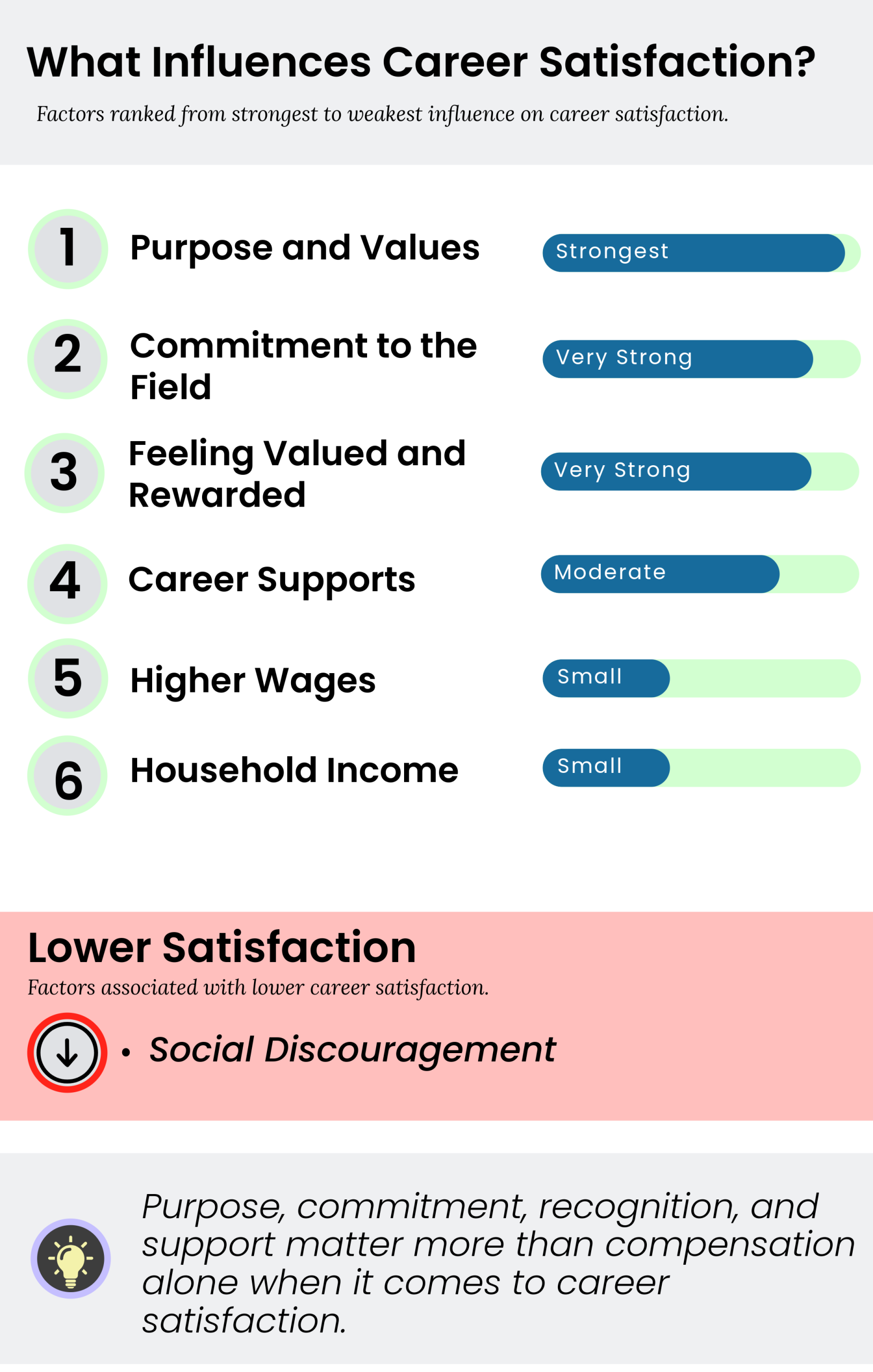
In our study, career satisfaction was related to a combination of an individual’s sense of purpose, support they received, recognition, and financial stability. The strongest predictor of satisfaction was the same as commitment—the work aligns with their practical considerations, sense of purpose, and desire to make a difference for children. In other words, professionals who chose early childhood education because it aligned with their family life, interests, abilities, and desire to make a difference reported the highest levels of career satisfaction.
Career satisfaction was also closely related to commitment to the field. Professionals who were more committed to remaining in early childhood education tended to be more satisfied with their careers. However, satisfaction is not limited to those pursuing advancement or leadership positions. In our sample, workforce members experienced meaningful and satisfying careers in entry-level, specialized, or leadership roles, and satisfaction appears to remain strong across different career pathways when work aligns with an individual’s goals, strengths, and values.
Feeling supported and valued also mattered. Professionals who reported stronger support systems, access to learning and networking opportunities, and opportunities for growth tended to be more satisfied with their careers. Those who felt their work was valued and fairly compensated also reported higher satisfaction, although these relationships were not as strong as those related to personal motivation and commitment.
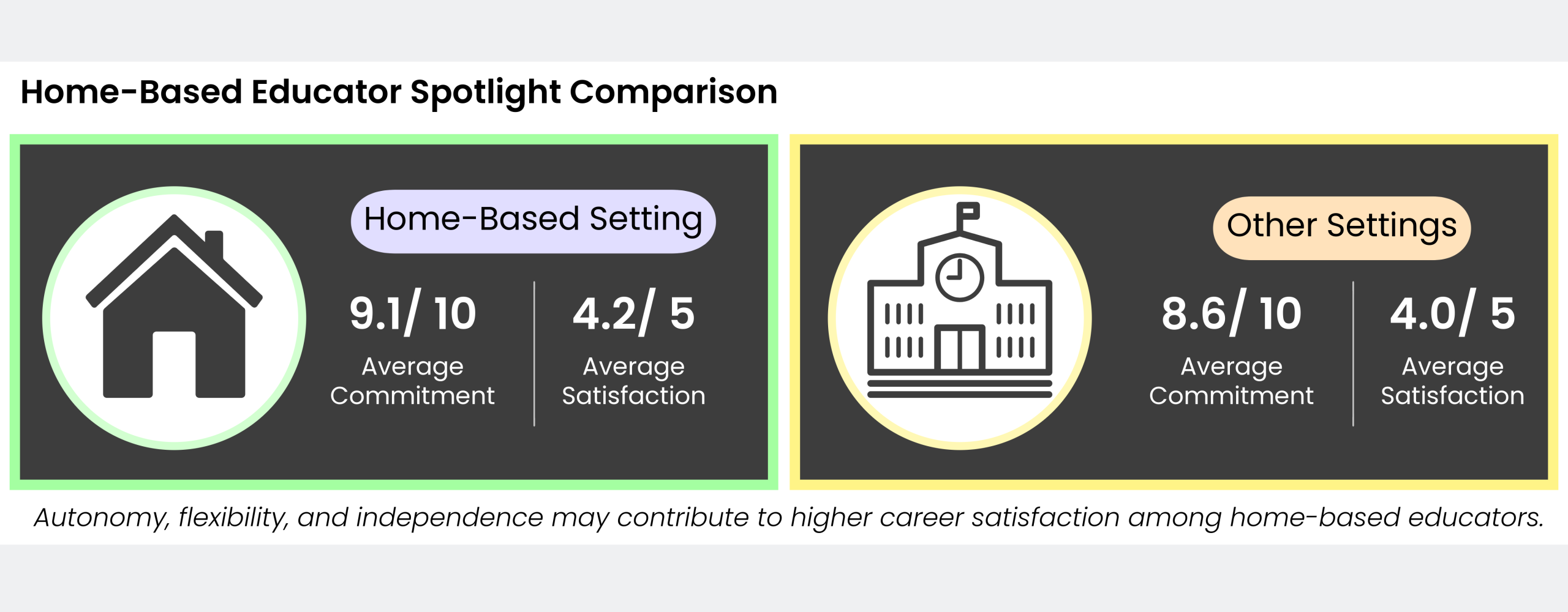
The relationship between compensation and career satisfaction differed across settings. For home-based educators, wages and household income were less connected to career satisfaction, suggesting that other aspects of the role may be more important. Greater autonomy, flexibility, and the ability to shape one’s own work environment (all of which may be features of home-based settings) may contribute to satisfaction regardless of income level. In contrast, wages were more strongly related to career satisfaction among public school educators, who may place greater importance on compensation given the time and financial investment of pursuing higher education often associated with their roles.
Finally, professionals who experienced discouragement or negative messages about choosing a career in early childhood education reported lower levels of career satisfaction. Together, these findings suggest that career satisfaction is shaped not only by compensation, but also by purpose, support, recognition, autonomy, and a sense of belonging within the profession.
Explore Additional Findings from Interviews

What This Means
We interviewed 174 early childhood professionals about their career trajectories, including up to 5 unique roles they have held in the early childhood field. Our interviews focused on what they liked and disliked about each role, their key job responsibilities in each role, and what motivated them to change roles throughout their career. Our coding team rated each role that each interviewee described in terms of organizational factors (e.g., perceived organizational support and person-organization fit), work-life balance, and role satisfaction. The coding team also rated each interviewee’s career overall in terms of the interviewee’s perceptions of their career performance (e.g., self-efficacy, adaptability, employability), the extent to which the interviewee engaged in individual career management strategies (e.g., career planning and exploration), and overall career satisfaction. Preliminary data from 43 interviews, covering 123 roles is presented below.
Our interview results align with the survey results in that interviewees reported high levels of satisfaction with their careers and each of their roles. They also expressed positive perceptions of the organizational support available to them and their fit within the organizational they worked in (i.e., “Organizational Factors”).
Interviewees described highly positive perceptions of their career performance, which included how well they were able to engage in the behaviors necessary to succeed in their careers (e.g., complete their day-to-day tasks, obtain required certifications, etc.); how well they could cope with changes and unpredictability in their careers; how employable they are; and how likely they are to initiate change within their career (e.g., finding a new job that aligns with their skills and motivations). In other words, interviewees expressed that they felt very positive about their ability to succeed in their careers.
Interviewees generally made statements that suggested they have thought deeply about their early childhood careers, which includes individual career management strategies such as intentional career planning and career exploration, along with positive attitudes about the early childhood field.
In general, interviewees also report that they are able to achieve work-life balance in their roles. Many described that their families benefited from their roles in the early childhood field (e.g., their schedules aligned well with their children’s school schedules, they had access to discounted child care, etc.). At the same time, they also described some drawbacks of these roles for their families, such as low pay or limited access to traditional workplace benefits (e.g., insurance, retirement, etc.).
How Can We Support the Workforce?
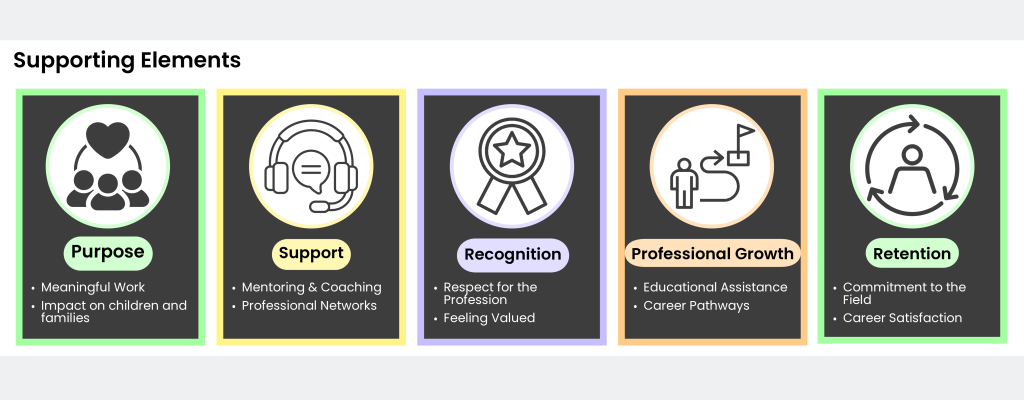
Taken together, the findings suggest that supporting the early childhood workforce requires more than improving compensation alone. While wages and economic stability remain important, professionals are most likely to remain committed to the field and experience satisfying careers when they feel connected to the purpose of their work, supported in their professional growth, and recognized for the value they provide to children, families, and communities.
Examples of how early childhood systems can support workforce commitment and satisfaction include:
- Expanding access to mentoring, coaching, and career guidance.
- Providing high-quality professional learning opportunities and professional networks.
- Increasing access to scholarships, financial aid, and other supports that reduce barriers to education and career advancement.
- Creating clear and accessible career pathways so professionals can envision long-term futures in the field.
- Recognizing and elevating the expertise, impact, and contributions of early childhood professionals.
- Promoting positive public perceptions of the profession and reducing messages that discourage individuals from pursuing or remaining in early childhood education.
- Improving compensation and economic stability to support workforce retention and career well-being.
- Creating opportunities for professionals at all career levels to experience growth, success, and meaningful contributions to children and families.
Sample and Limitations
Survey Sample
The findings presented here are based on our full sample of 2,612 respondents. This study engaged early childhood professionals across Texas, including both school-based and non-school-based roles. For school-based roles, we intentionally recruited a diverse and representative sample based on geographic region (using Texas’s 12 economic regions) and early learning program type (such as private child care, public schools, and Early/Head Start programs). We contacted early learning programs directly (using state databases) and indirectly (e.g., through interventionists) through email campaigns, postcard mailings, booths at regional conferences, and phone calls. For non-school based roles, we partnered with a diverse network of stakeholders (e.g., non-profit leaders, interventionists) who helped disseminate the survey across their communities and professional networks. Participants were provided gift cards for completing the survey and participating in follow-up interviews.
Respondents self-identified in one of the following occupational categories, adapting the national Power to the Profession’s framework:
- Educators (45.02% of the sample): those who provide direct service to children in child care, Head Start, public schools, or similar contexts from birth through age 8 (lead teachers, assistant teachers, substitute teachers, etc.)
- Pedagogical and Instructional Administrators (27.22%): those who guide the practice of early childhood educators (directors, principals, mentors, trainers, etc.)
- Business and Operations Administrators (10.6%): those who manage the business or operations of an early learning program but do not provide instructional or pedagogical oversight (early learning program owners, enrollment specialists, operations managers, etc.)
- Family and Child Health and Well-Being Professionals (5.9%): members of professions and occupations that focus on health and well-being who often work closely with early childhood educators (home visitors, psychologists, speech-language pathologists, child life specialists, etc.)
- Other Roles in Early Childhood (1.91%): roles that may be within schools or private/for-profit organizations (university faculty, advocates, product and curriculum developers, fundraisers, etc.)
Note: About 10% of our sample identified as former early childhood professionals, who may have held roles in one or more categories.
Interview Sample
We conducted interviews with 174 of the early childhood professionals who responded to the survey. Anyone who completed the survey was invited to complete an interview, and we aimed to interview a mix of educators and non-educators. From the 174 interviews, we gathered information about 597 job experiences. Of these, 307 were educator job experiences: 201 educator jobs in center-based child care, 51 educator jobs in public schools, 37 educator jobs in Head Start or Early Head Start, 10 educator jobs in home-based child care, and 8 in other educator roles (e.g., nanny/babysitter, camp counselor). Another 232 job experiences focused on pedagogical and instructional administrator roles, including 40 as assistant directors, assistant principals, or other administrators; 73 as director or principal; and 92 as mentors, coaches, consultants, or specialists. Twenty-nine of the job experiences were in business or operations administrator roles, including 8 center-based early learning program owners and 16 home-based early learning program owners. Eighteen of the job experiences were in family and child health and well-being roles (e.g., CPS case worker, foster care worker, early childhood interventionist, etc.), and 10 were in other roles (e.g., university faculty, advocate, speaker).
Limitations
These results come from surveys and interviews in which participants self-reported their level of career satisfaction and commitment to the field. Across our sample, early childhood professionals reported high levels of career satisfaction and commitment to the field. Although we recruited a sample that is geographically representative and includes professionals from child care, head start and early head start, public schools, and home-based settings, our sample may still be biased. For example, nearly half of our sample consists of early childhood educators; therefore, our sample may be more likely to reflect the perspectives of early childhood educators than professionals in other roles. Our sample may also be biased towards respondents who feel more positively about the field than their peers. Further, respondents to our survey may have reported higher ratings of career satisfaction and commitment to the field because of social desirability (i.e., telling us what they think we want to hear).
When interpreting these results, it is important to remember that these are correlations, and correlation does not indicate causation. We cannot say that any of the variables we identified caused participants to have higher career satisfaction or commitment to the field.
The questions about career supports asked participants to rate how important they thought each type of support was for their career. Participants may have given lower ratings to the types of support that they did not have access to (e.g., if they did not have financial support for education, they may have said that financial support for education was not important for their career). Therefore, increasing access to supports may have a more positive impact on career satisfaction and commitment to the field than our results currently suggest.
Acknowledgements and Suggested Citation
Thank you to the faculty, staff, researchers, and graduate assistants of the Children’s Learning Institute at UTHealth Houston whose contributions made this study possible. Their expertise in survey design, data collection, analysis, and interpretation provided valuable insight into the experiences of Texas early childhood professionals.
Special thanks to the Texas Workforce Commission’s Child Care and Early Learning Division for its continued support of workforce research and professional development initiatives that help strengthen the Texas early childhood workforce.
Suggested Citation
Children’s Learning Institute at The University of Texas Health Science Center at Houston. (2026). Career Study Findings: Commitment and Satisfaction in the Texas Early Childhood Workforce. Houston, TX.